

You're more visible than ever. So why aren't there more opportunities coming your way?
Caught in the visibility trap? You're growing an audience without building trust. Here's the difference between hollow and meaningful visibility.

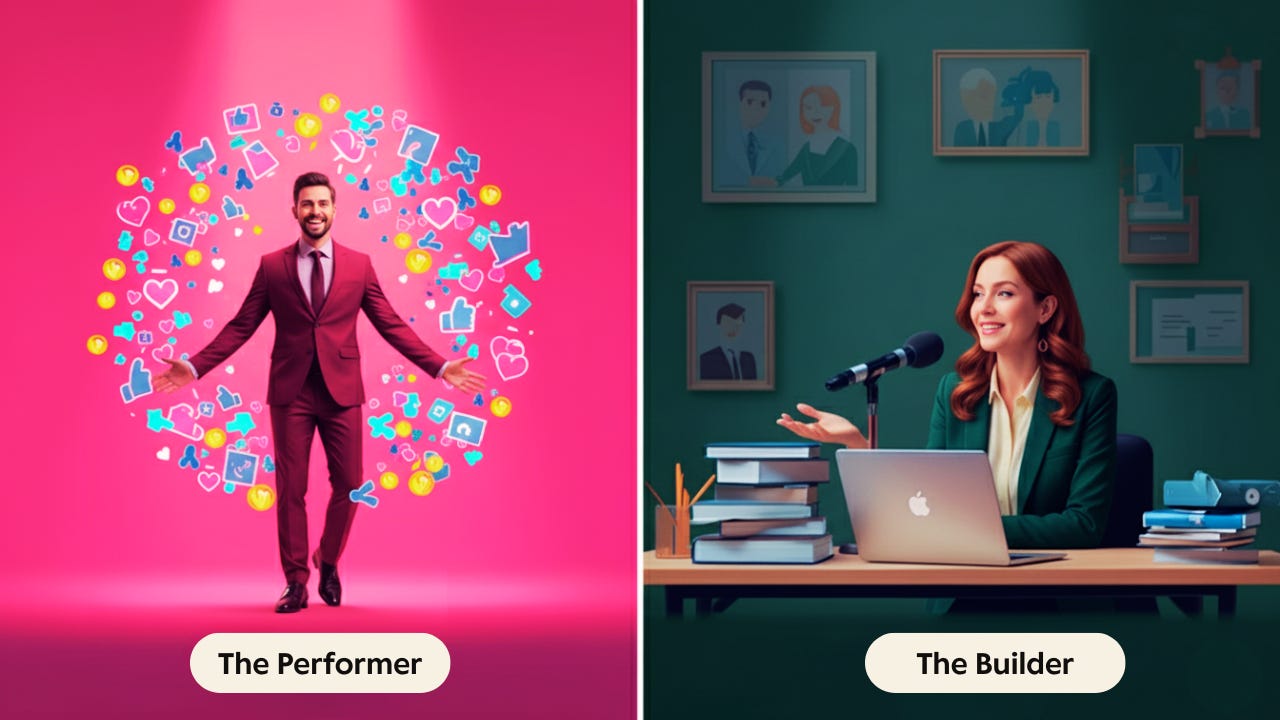
You’ve been putting in the work - showing up consistently, posting regularly, sharing insights - in an attempt to raise your professional profile and build your presence online.
But the opportunities you expected - the inbound inquiries, the quality clients, the meaningful partnerships, the podcast interviews - aren’t materialising at the rate you thought they would.
It’s all about visibility! That’s what we keep hearing. Become more visible and good things will happen.
Well, it turns out that advice is not just platitudinous, it’s misguided. Why? Because it treats all ‘visibility’ as equal.
Post more, they say. Be consistent. Find your voice. Build your audience.
That’s fine; on the surface, it makes sense.
But the trick is to go a cut deeper: there are two fundamentally different types of visibility, and confusing them has the potential to send you into ‘hamster wheel territory’, leading to no end of frustration.
The visibility trap
The ubiquitous ‘surface level’ LinkedIn and personal branding experts have sold us on a simple equation: More visibility = more opportunity.
Again, this proposition is not entirely wrong. But it’s dangerously incomplete.
What these self-appointed gurus don’t tell you is that visibility without substance is just noise, and it actually might be harming your reputation.
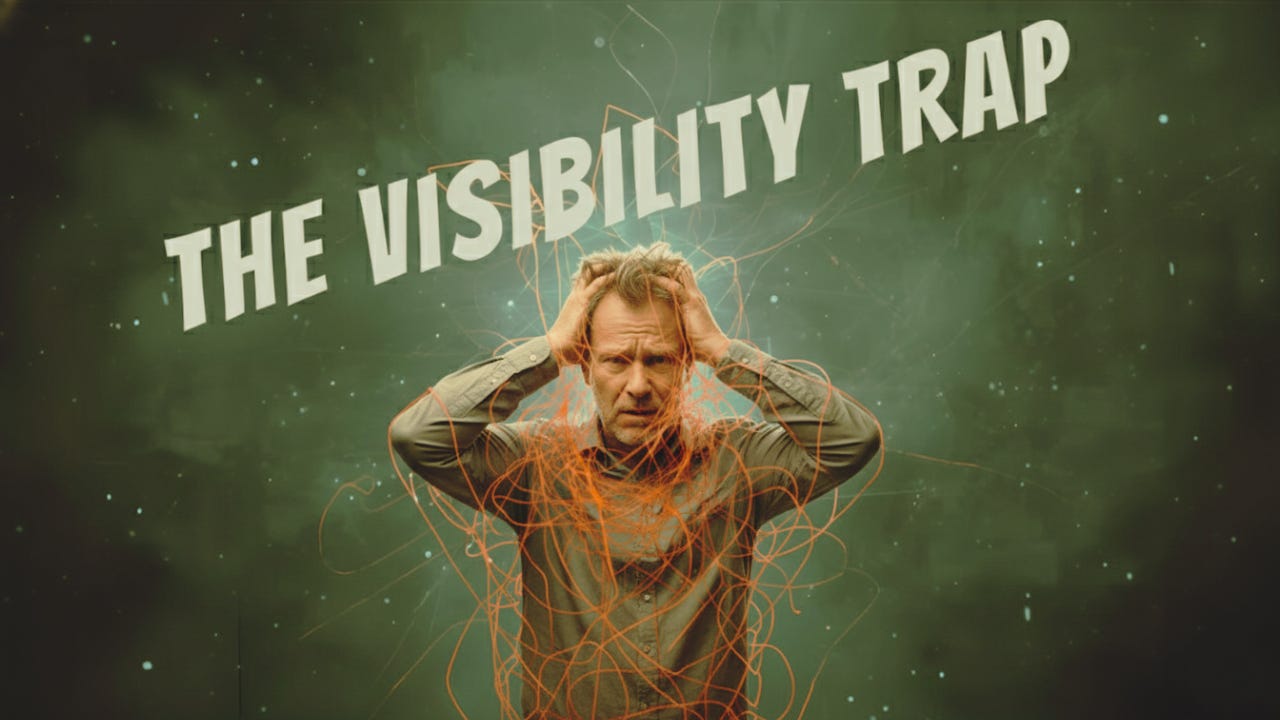
In an increasingly crowded (and less trusting) marketplace, audiences have become extraordinarily good at distinguishing between the real deal - professionals who are genuinely expert at what they do - and those pandering to algorithms in hopes of going viral.
The gap between the two types of visibility (detailed below) determines whether your efforts compound into lasting influence, or fade into irrelevance over time.
Hollow visibility vs. meaningful visibility
Hollow visibility is about being seen, pure and simple. It’s optimised for impressions, engagement, and algorithmic favour.
Make no mistake, it looks impressive at first blush with burgeoning follower counts, post views, and comment threads. But rarely does it build the thing that actually converts into opportunity: enduring trust.
Hollow visibility includes:
Generic motivational content disconnected from your actual work
Highlight reels that hide all struggle and make everything look effortless
Recycled advice everyone else is sharing, just repackaged in your voice
Self-promotion that announces your greatness rather than demonstrates it
Engagement that’s transactional, only showing up when you need something
Content optimised purely for algorithms rather than usefulness
Meaningful visibility, on the other hand, is about being known for something specific and valuable. It’s optimised for credibility, not just attention. It demonstrates competence rather than simply boasting about it.
And critically, it builds reputation while building visibility. Please note, they’re not separate efforts.
Meaningful visibility includes:
Sharing genuine expertise that helps people solve real problems they’re facing right now
Provoking thought by publishing fresh insights and big ideas (emerging thinking being developed in public - these ideas don’t have to be fully formed)
Being transparent about your process, mistakes made, and what you’re learning as you go - Mark Masters from You Are The Media exemplifies this👇 - he regularly talks about the struggles he faces as an entrepreneur, sharing his failures and lessons learned, plus what’s working in his business and the thinking behind his decisions; in other words, he builds trust through transparency.
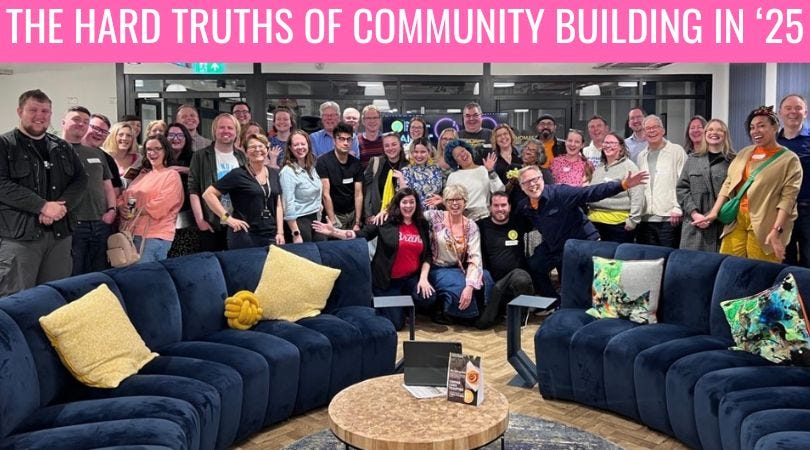
Creating content that demonstrates your competence through specificity and depth of thinking
Engaging authentically in communities - getting involved, asking good questions, giving credit generously, supporting other people’s work
Building relationships by showing up consistently without expecting immediate returns
Documenting your actual work, your research, your client results - not just abstract principles
Taking clear positions on industry issues, even when it’s uncomfortable.
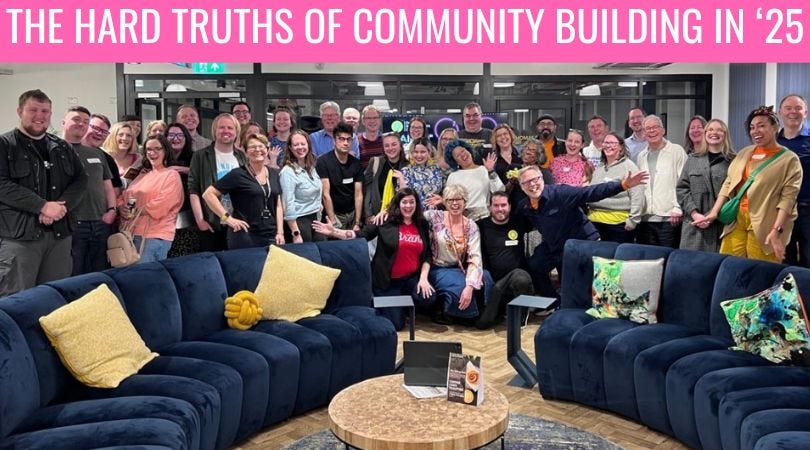
The difference isn’t subtle. One makes you stand out and perhaps become more instantly memorable and ‘famous’, while the other is more of a ‘slow burn’ visibility that earns trust over the long term.
And trust, as we know, is super important because it’s the social currency that converts visibility into opportunity.
The strategic approach to meaningful visibility
Here’s what the Johnny-come-lately personal branding gurus miss in their soapbox ramblings: the most powerful visibility builds reputation simultaneously.
They tend to treat visibility as pure content strategy - optimising hooks, posting times, and engagement tactics - with barely a mention of whether you have anything meaningful to say.
But this creates a gap between what you do, and what you say, and audiences can sense this disconnect, even if they can’t articulate why. The result? They don’t trust you enough to buy.
Meaningful visibility strategically integrates reputation-building into the visibility process itself:
When you share a detailed case study showing how you solved a specific client problem - including what didn’t work - you’re demonstrating competence while being visible. People don’t just see your name; they witness your expertise.
When you’re transparent about a project failure and what you learned from it, you’re building trust while being visible. You’re showing intellectual honesty and the kind of self-awareness and humility that makes people want to work with you.
When you engage thoughtfully with other people’s content - not just dropping “great post!” but actually adding genuine insight - you’re demonstrating your thinking while being visible. People notice the quality of your contributions, not just the frequency.
When you make introductions or share others’ work generously, you’re building relationships and goodwill while building your presence. You become known as someone who adds value to your network, not just extracts it.
When you teach what you know freely - the actual tactics, frameworks, and lessons from your experience - you’re establishing authority while being visible. People can assess your expertise directly rather than taking your word for it.
When you generously share your deeper thinking rather than hoard your ideas and insights, you’re showing, not merely telling people that you are putting in the work developing different ideas and looking for new solutions.
This is what I call strategic visibility.
Every action that makes you more visible also makes you more credible. There’s no gap between presentation and reality because you’re documenting reality, not performing an idealised version of yourself.
The reputation test
Here’s how to tell if your visibility is hollow or meaningful:
Ask yourself: Am I trying to help, or trying to impress?
Hollow visibility aims to impress. It’s designed to make you look knowledgeable, successful, or interesting. The metric is: “What will people think of me?”
Meaningful visibility aims to help or provoke thought. It’s designed to solve a problem, answer a question, or get people thinking differently. The metric is: “Will this actually help someone do their job better, or make a better decision?”
When you optimise for helping, you build reputation. When you optimise for impressing, you’re just building a (non-aligned) brand that potentially won’t survive scrutiny.
The litmus test: Would someone who has worked closely with you agree with what you’re publicly sharing? If there’s alignment - if your content reflects how you actually operate and deliver - you’re building meaningful visibility. If there’s a disconnect, that credibility gap will eventually get exposed.
Why this distinction matters now
Truth be told, it has always mattered. But I believe it’s more pressing today because we’re smack-bang in an era of what I call “visibility saturation”. That is, everyone is publishing content. Everyone has a take. Everyone is out there building their personal brand.
This creates two opposing problems:
For audiences (consumers, both B2B and B2C): It’s harder than ever to distinguish genuine expertise from ‘performed expertise’. People have been burned by polished presentations that couldn’t deliver, and sales pages that overpromised. So they’ve become more skeptical, more discerning, more likely to verify claims before trusting them. Indeed, the increased usage trends of gen AI tools (ChatGPT, Perplexity, Claude etc) backs this up; we’re doing our homework like never before.
For business owners and professional experts: The bar for standing out keeps rising. Simply being visible isn’t enough anymore. You need to be visible and credible. You need to demonstrate competence, not just claim it via clever copywriting.
The savvy entrepreneurs and professionals who thrive in this environment understand that visibility and reputation aren’t separate things. Instead, they’re joined at the hip. Every piece of content, every interaction, every public contribution either builds both, or wastes time building visibility that ultimately leads nowhere.
The long game
Hollow visibility can get you noticed quickly. It might even get you opportunities in the short term, especially if you’re good at presenting yourself.
But meaningful visibility gets you trusted. And trust is what converts visibility into lasting opportunity - the clients who come back, the potential partnerships and collaborations that come your way, the referrals that become your primary channel, the career options that expand rather than contract as you get more established.
The entrepreneurs and professionals who build enduring trust and influence understand this distinction instinctively. They don’t just ask “How can I be more visible?” They ask “How can I be visible in ways that build my reputation at the same time?”
Their content isn’t just about them, it’s genuinely useful to their audience. Their engagement isn’t transactional, it’s generous and has substance. Their positioning isn’t fiction based around their aspirations, it’s documentation of their actual expertise.

When visibility and reputation build together, you create something powerful: you become known for being good at what you do, not just known for talking about what you do.
That’s the difference between professionals and business owners who spend years creating content without results, and those who turn modest visibility into word-of-mouth advocacy and significant opportunity.
The question isn’t whether to invest in visibility (that’s a given), but whether your visibility is hollow or meaningful, and whether you have the discipline to choose usefulness over impressiveness, even when the latter feels more immediately rewarding.
So yes. Become more visible. But be strategically visible in ways that demonstrate who you actually are, not just who you want to appear to be.
That’s meaningful visibility, and it’s a powerful way to build trust and influence in today’s digital-first world.
Onwards!
TY
In case we haven’t met yet …
Hi, I’m Trevor. I’m a battle-hardened PR, content and digital communications strategist, guide and thought partner, specialising in authority branding . I help proven founders, leaders and experts become credible, influential voices in their industry.
If you think we might be a good fit, let’s get together for a chat! CLICK HERE TO BOOK A NO-OBLIGATION 20-MINUTE ZOOM CALL