

The fake expert problem has a solution - it's you
When fabricated profiles flood the media, real experts pay the price - unless they've done the work to be unmistakably findable, verifiable and trusted.

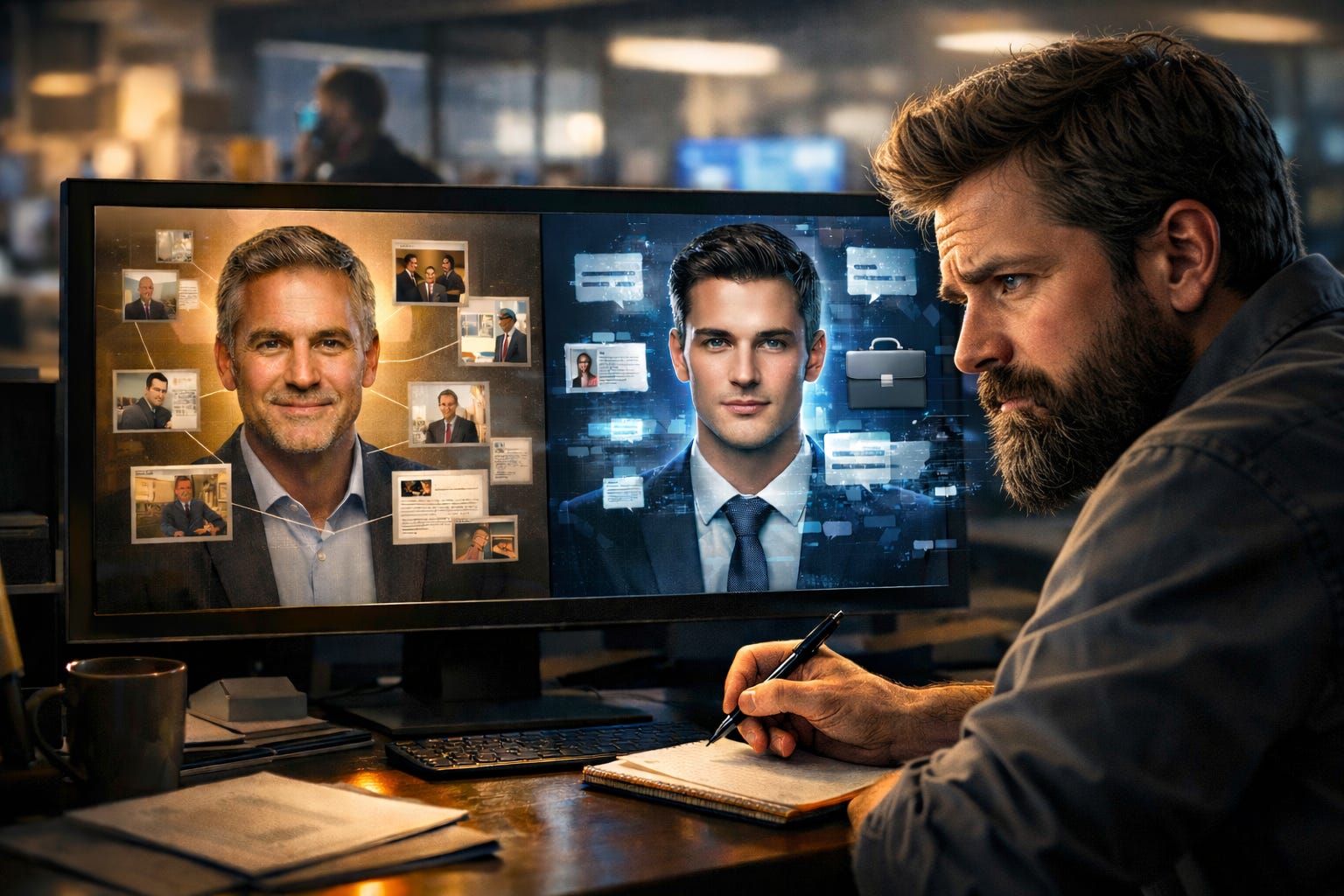
Journalists are now being pitched by experts who don't exist. Manufactured profiles, AI-generated headshots, job titles engineered to sound authoritative while attached to nothing in particular.
It's happening at scale, it's undermining trust, and the ramifications extend well beyond the media — if you're a genuine expert, it should concern you.
CIPR Influence recently reported on a phenomenon - one that PR practitioners and journalists have been privately grumbling about for a while. Press Gazette went further, conducting research that identified fake experts across five news brands and publishing a spreadsheet naming them publicly.
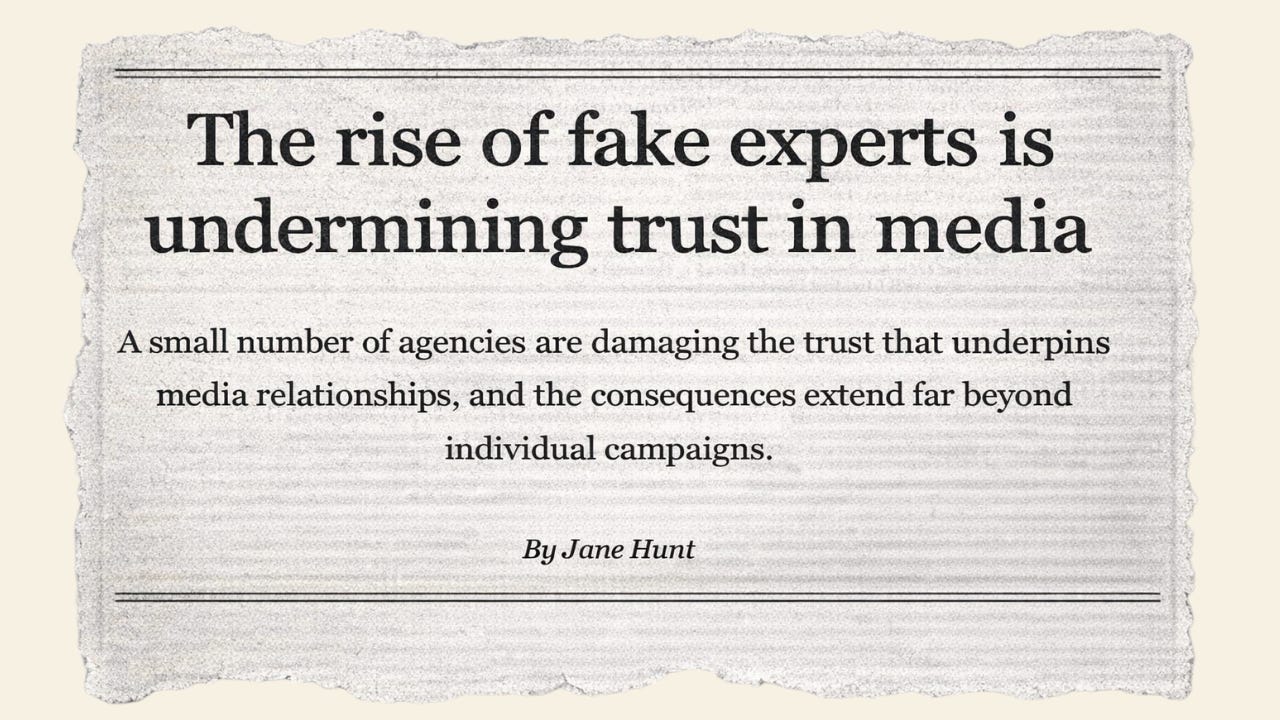
Jane Hunt, writing in CIPR Influence, framed the stakes clearly:
“Trust is already under strain due to shrinking newsrooms, AI-generated content and increasing production demands. Adding fabricated expertise to that environment accelerates the erosion of confidence.”
She’s right, and the implication for genuine experts is clear.
The cost falls on the credible
When fake experts pollute the media environment, the verification burden on journalists, producers and event organisers increases.
The bar for establishing trust rises. Editors who are already under pressure become more cautious about who they approach, or accept pitches from. And the professionals who lose out are often the ones who genuinely have something to say, but haven’t made it easy for anyone to verify that.
This is a reputation problem. More specifically, it’s a visibility problem that reputation alone can’t solve.
I’ve written before about the distinction between reputation and personal brand. Your personal brand is the specific value and identity you're claiming in the marketplace; your reputation is the story others tell about you based on your accumulated actions over time - the outcome you influence but don't fully control.
Most credible professionals have worked hard on their reputation, earned through years of genuine work. Far fewer have done the personal brand work - the intentional articulation, packaging and communication of their expertise that makes that reputation visible and verifiable to people who don't already know them.
That gap is now a liability.
Your digital footprint is your verification layer
A journalist on deadline, a podcast host considering guests, a conference organiser reviewing proposals - none of them have time to dig thoroughly.
If you don't surface quickly, clearly and credibly, do you even exist? And if you can be found, will your digital footprint do the professional you justice?
Putting it in perspective: In a landscape where fake profiles are actively being engineered to appear legitimate, the professionals who can be verified quickly hold a significant advantage over those who simply are legitimate, but invisible.
So what does a trustworthy digital footprint actually look like?
At the foundation, it needs to do three things:
demonstrate that you exist and are active,
show evidence of your thinking on the topics you want to be known for, and
provide enough third-party corroboration that someone can quickly satisfy themselves you’re the real thing.
In practical terms, that means maintaining an active presence on LinkedIn - not just a profile, but regular posts and published articles on the subjects you want to own. Bonus points for building a credible presence on a relevant secondary social channel.
It means having at least one owned long-form media channel where you publish consistently: a newsletter, a podcast, a blog, or a YouTube channel (not technically an owned media channel, but you can - and should - also embed your videos elsewhere i.e. your blog/website).
And it means building a steady body of earned media coverage - quotes in industry publications, opinion pieces, speaking appearances, podcast interviews - that exists independently of what you say about yourself.
A personal bio website (your own domain, kept current, linking to your social channels and coverage) is a simple but underrated asset. When someone Googles your name, that page should greet them like a well-organised front door rather than a collection of stale results.
More advanced work - SEO, GEO, structured discoverability for AI search - comes later. But most genuine experts haven’t done the foundational work yet, and that’s where the leverage is.
Credibility still has to earn its reach
None of this is about manufactured credibility. It’s about something more straightforward: if you've earned the right to be considered an expert, make that case visible.
The professionals being bypassed by fabricated profiles aren't losing because they lack credibility, they're losing because they haven't translated that credibility into a form that others can quickly find and act on.
The fake expert problem is, at root, an information problem. Journalists and producers are working from incomplete signals. Your job - if you want to be found, trusted and called upon - is to make your signal impossible to miss.
The stakes, as Jane Hunt put it, require “collective responsibility and measurable standards, not short-term shortcuts.”
For genuine experts, that means doing the long work: building a digital presence that reflects the reputation you’ve already earned, and making it impossible to mistake you for someone who hasn’t earned it.
Onwards!
~ Trevor
P.S. The media angle is the catalyst for this piece, but the principle runs wider. Every potential client, partner, collaborator or referrer will Google you, check your LinkedIn, and increasingly use AI to look for evidence that you are who you say you are. A credible digital footprint doesn't just open media doors. It's the foundation of commercial trust.
Sources: CIPR Influence (Jane Hunt) / Press Gazette - links below
The rise of fake experts is undermining trust in media
Faces of fakery: More fake and AI generated experts con their way into media
In case we haven’t met yet …
Hi, I’m Trevor. I help genuine founders, experts and thought leaders build visibility, influence and trust - on their terms, in their voice.
Would you like to discuss how I can help you in a mentoring capacity to build your profile and reputation as a trusted and credible expert or thought leader in your industry? CLICK HERE TO BOOK A NO-OBLIGATION 20-MINUTE ZOOM CALL
Trev, I'm of the view that this is a double, if not triple, whammy; a perfect storm of distrust. Fabricated experts/expertise, fake news aplenty and - the third wheel - an increasingly unreliable media. Hard to know what is real and true, especially when even once-venerated mastheads such as the AFR publish whatever Trump has said in the past few minutes; updating headlines several times within an hour. It really is impossible to believe, let alone keep up with, what's going on.
“Trust is already under strain due to shrinking newsrooms, AI-generated content and increasing production demands. Adding fabricated expertise to that environment accelerates the erosion of confidence.”
PS: The Daily Mail, The Sun, Express, Mirror, Daily Star (ooh aah Daily Star) - that list says all you need to know about just how fake all this sh*t is. Not to disparage the Press Gazette's research (but ... it hardly qualifies as in-depth investigative reportage! The Currant Bun, Daily Fail and others have long been known for cheap, fake newstainment. Key word in there is 'stain'!)